May 13, 2025
Summary
Despite the reduction in Tariff rates caused by Trump’s de-escilation with China, rates still stand higher than they have at any time in living memory. As a result, the average American Household will have to pay more than $2,800 a year in additional costs. This trade environment is creating significant strain across multiple sectors, with consumer debt delinquencies reaching their highest level since 2020 and small businesses planning capital outlays falling to pandemic-era lows. The economic uncertainty has triggered concerning capital flight dynamics, with institutional investors beginning to reduce US exposure, options traders maintaining bearish dollar positions, and the US projected to be the only country globally experiencing declining tourism revenue (an estimated $12.5 billion loss in 2025).
Adding to these pressures, House Republicans have proposed tax plans estimated to increase the federal deficit by $5.3 trillion over a decade if extended permanently, reducing government revenue by 90-160 basis points of GDP annually. The financial sector shows additional warning signs, with private equity firms loading portfolio companies with debt to pay dividends while retail investors overpay for PE stakes. Meanwhile, small businesses receive minimal support in navigating the trade environment, and regulatory rollbacks (including 67 rescinded CFPB guidance documents) may further reduce economic protections. These developments collectively suggest an economy experiencing significant strain from policy decisions that may worsen stagflationary conditions.
Releases
Consumer Finances
Q1 2025: Consumer Debt In Delinquency Hit Its Highest Level Since 2020. According to Bloomberg, “The share of outstanding US consumer debt that’s in delinquency rose in the first quarter to the highest in five years, reflecting an end to the pandemic-era pause on reporting delinquent student loan payments on credit reports. Some 4.3% of debt was delinquent in the first three months of this year, the most since 2020 and up from 3.6% in the prior quarter, the New York Fed said Tuesday in its Quarterly Report on Household Debt and Credit.” [Bloomberg, 2025-05-13]
Trade War
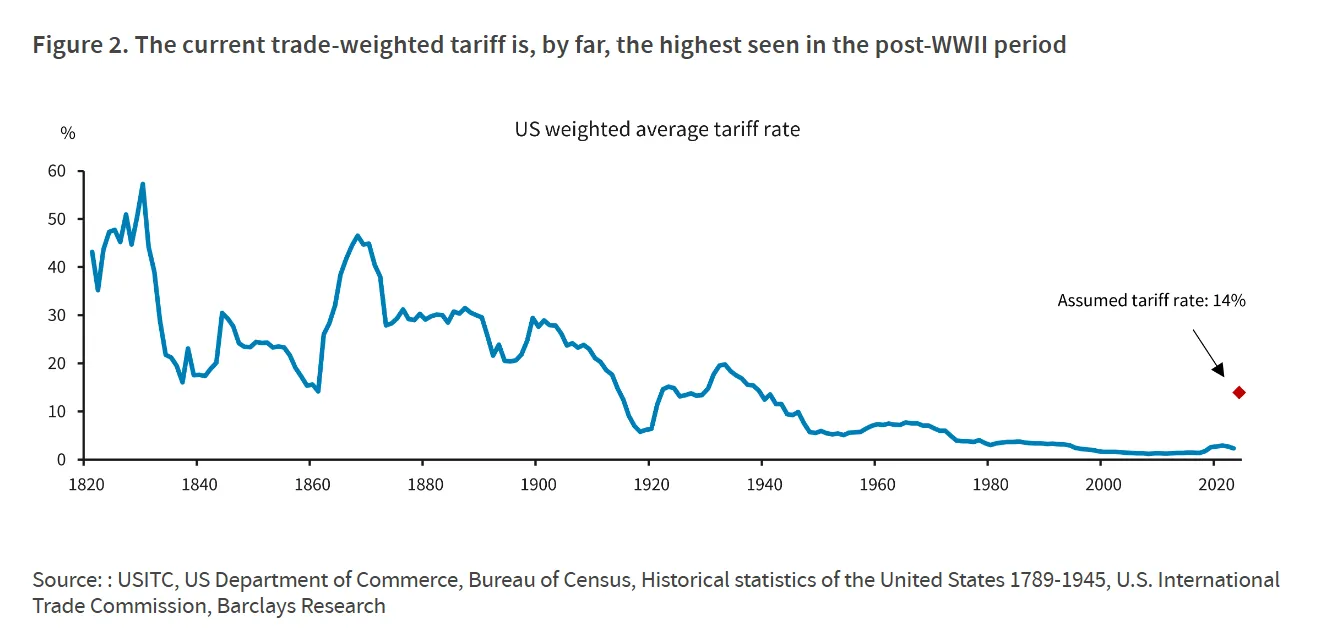
Even After Trump’s Pause In Tariffs On China, American Consumers Would Face The Highest Tariffs Since The 1930s. According to the Yale Budget Lab, “Current Tariff Rate: Consumers face an overall average effective tariff rate of 17.8%, the highest since 1934. The reduction since the April 15 report is almost entirely due to the lower rates on Chinese imports—the US-UK trade deal has minimal effects on average tariff rates. Even after consumption shifts, the average tariff rate will be 16.4%, the highest since 1937.” [Yale Budget Lab, 2025-05-12]
Price Increases Due To Trump’s Tariffs Would Cost The Average American Household $2800 (2024 Dollars). According to the Yale Budget Lab, “Overall Price Level & Distributional Effects: The price level from all 2025 tariffs rises by 1.7% in the short-run, the equivalent of an average per household consumer loss of $2,800 in 2024$. Annual pre-substitution losses for households at the bottom of the income distribution are $1,300. The post-substitution price increase settles at 1.4%, a $2,300 loss per household.” [Yale Budget Lab, 2025-05-12]
Despite The Cuts To Tariffs From Trump’s Arangement With China, Levels Still Surpass Any In Living Memory.
 [Bloomberg, 2025-05-13]
A 30 Percent Tariff Could Result In A 5 To 10 Percent Increase In Consumer Prices On Imported Goods. According to Bloomberg, “The temporary tariff relief means that US companies will try to quickly ship out products that were being held in factory warehouses in China, according to David Chitayat, CEO of Genimex, which does contract manufacturing for global brands. Many businesses will probably try to stock up on their products in the US to have a cushion of inventory in case trade talks break down or levies spike back up after the 90-day period. Some of those goods will still need to be produced, since some manufacturing was paused during the surge in tariffs. Chitayat predicted companies will be able to absorb the tariffs at their current level — but consumers will still face higher prices. ‘The tariffs are still meaningful, but should be manageable for most brands,’ he said, assuming companies hike prices. A 30% increase in manufacturing costs translates to roughly a 5% to 10% increase in the price consumers pay for the product, he added.” [Bloomberg, 2025-05-12]
While Trump’s Trade Pause Allowed Bogg Bag To Reverse Its Decision To Raise Prices, It Decided To Keep Its Decision To Shrink The Number Of Items In Its Holiday Lineup. According to Bloomberg, “Bogg Bag, a company known for its perforated tote bags, has reversed an earlier decision to raise prices and will instead keep them the same — at least for now. The company has also resumed production that was halted earlier this year. However, Bogg is planning to cut its fall and holiday product lineup by 45 items — or almost half of its collection — so that it doesn’t have to rush production to make up for lost time.” [Bloomberg, 2025-05-12]
May 2025: India Took Steps To Retaliate Against Trump’s Steel And Alumnimum Tariffs. According to Bloomberg, “India has proposed levies on some US goods in response to Washington’s duties on steel and aluminum, marking its first retaliation against President Donald Trump’s tariff regime, even as the two countries move closer to finalizing a trade deal. The South Asian nation has informed the World Trade Organization that the US tariffs on these metals are ‘safeguard measures’ — trade restrictions — that will adversely impact India’s trade, according to a notification on Monday. New Delhi reserves its right to ‘suspend concessions or other obligations’ as a counter measure to the US duties, the notification said, citing WTO rules. The move marks India’s first retaliatory action during Trump’s second term. Just last month, even as the US president announced a flurry of new tariffs, New Delhi had signaled it would refrain from any tit-for-tat moves, choosing instead to prioritize negotiations toward a bilateral trade deal. Both countries aim to finalize the agreement by this fall.” [Bloomberg, 2025-05-13]
Folding To China
Trivium China Co-Founder Trey McArver: “This Is Arguably The Best Outcome That China Could Have Hoped For.” According to Bloomberg, “The deal ended up meeting nearly all of Beijing’s core demands. The elevated ‘reciprocal’ tariff for China, which Trump set at 34% on April 2, has been suspended — leaving America’s top rival with the same 10% rate that applies to all countries including the UK, a longtime ally that reached a deal with the US last week. The US met Beijing’s call for a point person for talks by setting up a mechanism headed by Treasury Secretary Scott Bessent. And the two sides agreed to take ‘aggressive actions’ to stem the flow of fentanyl, which could eventually lead to the elimination of the additional 20% tariff. ‘This is arguably the best outcome that China could have hoped for — the US backed down,’ said Trey McArver, co-founder of research firm Trivium China. ‘Going forward, this will make the Chinese side confident that they have leverage over the US in any negotiations.’ Xi struck a defiant tone ever since Trump began raising US tariffs to their highest level in a century. In contrast to other world leaders, he refused Trump’s repeated calls to get on the phone with the US president — even as levies rose to levels that China called a ‘joke.’” [Bloomberg, 2025-05-12]
- RAND China Research Director: The Deal Vindicated “Xi’s Focus On Manufacturing And Self-Reliance.” According to Bloomberg, “‘The lesson is economic power matters,’ said Gerard DiPippo, associate director of the RAND China Research Center. ‘For Beijing, it’s a strategic vindication, and one that makes Xi’s focus on manufacturing and self-reliance harder to argue against, at least from an economic security perspective.’” [Bloomberg, 2025-05-12]
May 2025: Trump Slashed The Rate Applied To Shipments With A Retail Value Of Less Than $800 From 120 Percent To 54 Percent. According to the Wall Street Journal, “The Trump administration said it would cut tariffs on low-value parcels from China to 54% from 120%, hours after Washington and Beijing agreed to a 90-day trade truce. According to a White House executive order late Monday, the U.S. will slash the ‘de minimis’ tariff on shipments from China, including Hong Kong, marking a further de-escalation in the simmering trade war between the world’s two largest economies. Under U.S. tax law, the de minimis exemption allows companies to avoid import taxes and customs inspections on international shipments with a retail value of less than $800.” [Wall Street Journal, 2025-05-13]
Holding Back Investment In America
Despite Having Promised, With Trump Present, To Deploy Hundreds Of Billions Of Dollars, SoftBank Has Yet To Develop A Financing Template For Its “Stargate” Project. According to Bloomberg, “SoftBank Group Corp.’s plans to invest $100 billion in artificial intelligence infrastructure in the US have slowed, with economic risks stemming from Washington’s tariffs holding up financing talks. SoftBank founder Masayoshi Son and OpenAI co-founder Sam Altman unveiled the Stargate project in January with promises to begin deploying $100 billion ‘immediately’ and raise that to around $500 billion over time. But more than three months later, SoftBank has yet to develop a project financing template or begin detailed discussions with banks, private equity investors and asset managers.” [Bloomberg, 2025-05-12]
Potential Bullwhip In Getting Things Through In 90 Days
Bloomberg Economist Anna Wong: Port Congestion Could Negate Any Disinflationary Impact From The Tariff Pause. According to Bloomberg, “‘One reaction to a sharp tariff cut for China could be to assume it’s disinflationary. But the reality is more nuanced,’ Bloomberg economists led by Anna Wong said Monday in a notepreviewing the numbers. ‘A catch-up period for restocking retailers” inventories may lead to port congestion, and if the items on US store shelves are simply scarce — rather than entirely out of stock — then price increases could be recorded faster.’” [Bloomberg, 2025-05-12]
The 90 Day Delay In Higher Tariffs Going Into Effect Provided Companies With A Very Tight Window To Manufacture In China And Ship To The United States. According to Bloomberg, “Getting up and running again won’t be straightforward. Sellers of imports from China are facing risks such as a sudden surge of shipping demand that’s expected to raise costs and create delays. On top of this, the relatively short 90-day window in which tariffs are being lowered doesn’t give companies a lot of wiggle room when it comes to trans-oceanic supply chains.” [Bloomberg, 2025-05-12]
California Outdoor Gear Seller Tarptent Would Not Place An Additional Order Unless Manufacturers Already Had Surplus Fabric, Citing The Tight Window. According to Bloomberg, “Tarptent, a California-based seller of outdoor gear, which had previously asked its Hong Kong-headquartered supplier to pause purchase orders from its factory in China, is now exploring whether its orders can be resumed. The company is also gauging whether there’s enough time to order and ship the US-made fabric it uses for its tents to the manufacturer in time for a production run to happen within the 90-day reprieve window in which the countries are engaged in talks. ‘My guess is that it is pretty unlikely,’ Henry Shires, Tarptent’s president, said Monday in an email. ‘At this point I would say that the 90-day widow is very narrow — and the window givers are too unreliable — to risk a big investment’ in fabric, he said. Shires said he was waiting for the sun to rise in Hong Kong to see if the manufacturer could use fabric that’s already on-site at the factory.” [Bloomberg, 2025-05-12]
Private Equity’s Quest For Americans’ Retirement Savings
Retail-Provided Private Equity Bailouts
Bloomberg Headline: “Buyout Firms Ramp Up Debt Deals To Pay Dividends. [Bloomberg, 2025-05-13]
2024: Distributions To Investors As A Share Of Net Assets Fell To A Record Low, Less Than Half Their Average Value. According to Bloomberg, “That’s a boon for private equity firms, who are taking the longest in more than a decade to give investors their money back. The buyout industry was sitting on some $3.6 trillion of unrealized value at the end of 2024 across 29,000 unsold portfolio companies, according to Bain & Co. Distributions to investors as a share of net asset value fell to a record 11% last year, compared with an average 25%.” [Bloomberg, 2025-05-13]
Despite The Risk That The Companies They Own Could Become “Zombies,” Private Equity Companies, Under Pressure To Generate Earnings, Have Loaded Up Their Portfolio Companies With Debt To Pay Themselves Dividends. According to Bloomberg, “These sales come at a time when private equity firms are under pressure to generate earnings from their portfolio companies after an extended period of muted dealmaking. So far there’s no sign debt investors have been protesting, given the offerings coincide with a marked shift toward positive risk sentiment. ‘Private equity firms need to monetize their assets. In many cases equity multiples are lower than when they acquired businesses, so a dividend recap is the best option to show you created some value,’ said Nicolas Jullien, head of fixed income at Candriam SA. Such debt-for-dividend deals are known as ‘dividend recapitalizations’ in the market. ‘But it’s not without risk in a higher rate environment — you might create more zombie companies with too much debt,’ he added.” [Bloomberg, 2025-05-13]
Retail Vehicles Have Been Overpaying For Private Equity Stakes
Financial Times: Retail-Funded Vehicles Have Allowed Institutional Investors To Cash Out Of Private Equity “At Higher Prices Despite The Industry’s Years-Long Downturn.” According to the Financial Times, “Big private equity investors are taking advantage of a flood of capital from wealthy individuals to cash out their buyout fund holdings at higher prices despite the industry’s years-long downturn. Some of the largest evergreen vehicles, which allow retail investors to deposit and withdraw cash at regular intervals, have bought swaths of private equity fund stakes from institutional investors seeking liquidity after a dearth of distributions. That extra demand has helped prop up prices for stakes in private equity funds on the secondary market, even as some institutional investors have cooled on investing in new funds because of the difficulties buyout firms have had exiting investments and returning cash to their backers. ‘There’s a lot of money flowing into these [evergreen] vehicles,’ said one leading adviser, which they said were under pressure to deploy it quickly.” [Financial Times, 2025-05-11]
2024: Retail Funds Paid On Average Four Percent More Than Traditional Buyers In Comparable Investments. According to the Financial Times, “Retail funds have offered higher prices for secondary stakes than others in the market. That has helped the buyout sector to weather a challenging period by making it easier for institutional investors to cash in holdings, at a time when dealmakers are unwilling or unable to sell the underlying assets. Evergreen vehicles paid on average 4 per cent more last year for fund stakes than traditional buyers, according to survey data from advisory firm Campbell Lutyens, while investment bank Evercore said the influx of retail capital had ‘bolstered pricing’.” [Financial Times, 2025-05-11]
Due To The Accounting Of Private Assets, Fund Managers Can Pull Financial Shenanigans To Mark Profits To Market Immediately. According to the Financial Times, “Buying secondaries also allows evergreen fund managers to show instant returns. They tend to be priced at a discount to their net asset value (NAV), but the buyer can mark them up to their previous NAV immediately after purchase.” [Financial Times, 2025-05-11]
Venture-Backed Attempts To Allocate Retirement Funding To Private Equity
Basic Capital, The Bill Ackman-Backed Startup Lends To American’s IRAs And 401(k)s At 6.25 Percent To Lever Them Up And Purchase Private Credit. According to Bloomberg, “When Abdul Al-Asaad was a student at Harvard Business School in 2021, he pitched billionaire investor Bill Ackman on an idea for allowing everyday people to finance investments. Ackman was intrigued — and wound up being Al-Asaad’s first investor. These days Al-Asaad, 30, has more venture backers. He has a name for his business: Basic Capital. And he has an audacious strategy that involves term financing, leverage and private credit — terminology commonplace on Wall Street but far from what individual investors might expect when it comes to their retirement savings. Basic Capital’s basic pitch: Its 401(k) and IRA platform offers savers $4 in leverage for every $1 saved. At current interest rates, the cost of that extra money, which sits in a limited liability company created for each account, would be about 6.25%. But, the thinking goes, the startup can find private credit investments from the major players in the industry that yield more like 9%, meaning they will throw off enough cash to cover the borrowing costs and then some. Mix in some traditional stock-market exposure, and — assuming those private credit yields persist and that equities gain in line with historical averages — the startup said savers can expect low double-digit returns.” [Bloomberg, 2025-05-12]
Adding Leverage To Retirement Products Increases The Exposure To A Negative Terminal Value. According to Bloomberg, “But offering the option to everyday Americans speaks to the push among the finance industry, which has been squeezed by lower fees and greater competition, to reach individual investors — especially the $12 trillion pool of capital in employer-sponsored workplace plans. ‘If you want to buy a house, you take a mortgage. If you want to buy a car, you take a car loan. If you want to go to school, you take a student loan,’ Al-Asaad, who previously worked in leveraged finance at Goldman Sachs Group Inc., said in an interview. ‘Why isn’t there a mechanism for me to finance investments in the market?’ The risk with leverage, of course, is that the market doesn’t go your way. If the stock market swoons for an extended period, or if the companies that borrowed through private credit default or go bankrupt — the industry has been going though a rough patch amid worries that credit quality will decline — an investor would be on the hook to repay the financing out of their own funds. In theory, they could be wiped out entirely. Just as gains compound, so do losses.” [Bloomberg, 2025-05-12]
The Product Charged Fees Of Between 25 And 75 Basis Points, With Additional Fees On Withdrawl. Higher Fees Than More Transparant Options. According to Bloomberg, “The platform comes with fees to account for the complexity. On Basic Capital’s 401(k) platform, plans are charged $5 per employee, as well as a management fee of 0.25% of plan assets. Those who choose to allocate to its product pay an additional 0.5% fund management fee and 5% of the gains on withdrawal. Those in self-directed IRAs pay the same 0.5% fee and 5% of gains, as well as $25 a month. Basic Capital enters the 401(k) space during a time marked by scrutiny of plan sponsors. Potential red flags in Basic Capital’s product are “the leveraging, various moving parts and relative complexity, potential counterparty risks, transparency issues and the fees,” said Mark Iwry, a former senior adviser to the Treasury Secretary for national retirement and health policy and a nonresident senior fellow at the Brookings Institution.” [Bloomberg, 2025-05-12]
A Question Of The Administration’s Priorities
Gifts To Big Business
May 2025: The CFPB Rescinded 67 Regulatory Guidance Documents. According to JD Supra, “The Consumer Financial Protection Bureau (CFPB or Bureau) announced the withdrawal of 67 regulatory guidance documents, including interpretive rules, policy statements, and advisory opinions that have been issued since the Bureau’s inception in 2011. The withdrawn guidance documents impact most federal consumer protection laws, including the Consumer Financial Protection Act of 2010 (CFPA), Fair Credit Reporting Act (FCRA), Fair Debt Collection Practices Act (FDCPA), Equal Credit Opportunity Act (ECOA), Truth in Lending Act (TILA), Electronic Fund Transfer Act (EFTA), and Military Lending Act (MLA). This decision marks a significant change in the Bureau’s approach to supervision, regulation, and enforcement under the current administration.” [JD Supra, 2025-05-12]
Small Business Being Crushed
April 2025: The Share Of Small Businesses Planning Capital Outlays Fell To Its Lowest Level Since April 2020. According to the NFIB, “Eighteen percent (seasonally adjusted) plan capital outlays in the next six months, down three points from March. The last time the percent of firms planning capital outlays was this low was in April 2020, during the COVID-19 pandemic.” [NFIB, 2025-05-13]
Despite His Administration Launching This Trade War, The Trump Small Business Administration (SBA) Had Not Posted Information About Finding American Manufacturers. According to the Wall Street Journal, “‘There’s a lack of support coming out of the SBA,’ said Sarah Wells, chief executive of Sarah Wells Bags, a Virginia-based seller of breast-pump bags and other nursing items. ‘There are no webinars on how to find American manufacturers, no case studies on how to find experts. There are no pathways I have been able to find.’” [Wall Street Journal, 2025-05-11]
- Trump Himself Dismissed The Need To Provide Resources For Small Businesses. According to the Wall Street Journal, “President Trump dismissed calls for small-business relief in a recent TV interview. ‘They”re not going to need it,’ he said. ‘They”re going to make so much money—if you build your product here.’” [Wall Street Journal, 2025-05-11]
Unlike Their Larger Peers, Many Small Businesses, And Their Owners, Have Limited Financial And Functional Flexibility. According to the Wall Street Journal, “Unlike larger companies, small businesses have fewer levers to pull to help them endure the new tariff regime. Most work with a single factory or a handful of suppliers, making switching production to lower-tariff countries especially difficult. Smaller margins, thinner cash cushions and tiny staffs leave them more vulnerable to trade battles and other economic storms. The stakes are high, and deeply personal. Finances of small businesses and their owners are often deeply intertwined, with a business its owners’ largest—or only—asset. Personal guarantees can also make owners liable for their company’s debt.” [Wall Street Journal, 2025-05-11]
Republican Tax Plans
Joint Committee On Taxation: House Republicans’ Tax Plans Would Raise The Deficit By $5.3 Trillion Over A Decade If Extended Permanently. According to the Committee for a Responsible Federal Budget, “The House Ways & Means Committee is set to mark up its title of the Fiscal Year (FY) 2025 reconciliation bill on Tuesday. The Joint Committee on Taxation (JCT) estimated that the bill as written would increase deficits by $3.8 trillion through 2034, or 1.1 percent of Gross Domestic Product (GDP); if all of its expiring policies are extended permanently, we estimate it would add $5.3 trillion to deficits, or 1.5 percent of GDP.” [Committee for a Responsible Federal Budget, 2025-05-13]
House Republicans Plans Would Cut The Government’s Tax Revenue By Between 90 And 160 Basis Points Of GDP Per Year. 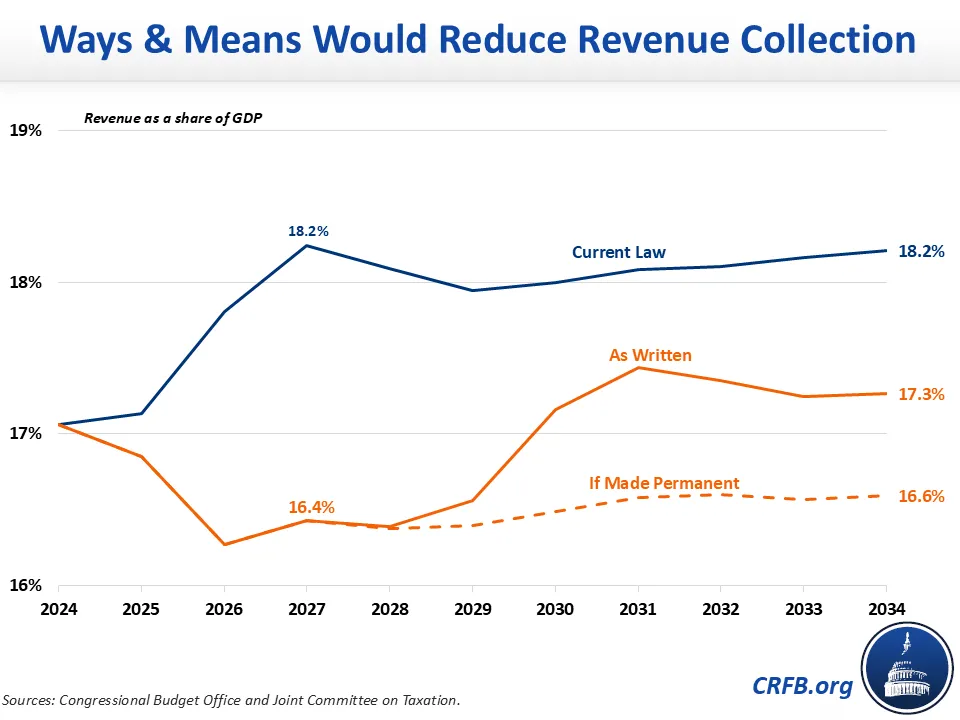 [Committee for a Responsible Federal Budget, 2025-05-13]
Capital Flight
Financial
CBO Director Philip Swagel: The Chaos Unleashed By Trump’s Trade War Could Cause A Lasting Aversion To Investing In The United States, Potentially Denting Growth And Limiting The Ability To Finance The Debt. According to the Financial Times, “The Wall Street ructions sparked by President Donald Trump’s trade war could be a ‘tipping point’ for foreign investors” willingness to hold US assets, the head of Congress’s fiscal watchdog has warned. ‘Even as we move away from the volatility of April, the memory of it will still remain,’ Phillip Swagel, director of the Congressional Budget Office, told the Financial Times. ‘Something we”re trying to figure out is will there be a lasting hesitation among global investors as they look at the US.’ Trump’s April 2 ‘liberation day’ tariff announcement ignited acute volatility in US government debt and equity markets, with the S&P 500 share index plummeting as much as 15 per cent and borrowing costs surging. Markets stabilised after Trump paused most of the steep ‘reciprocal’ levies, but concerns have lingered that the president’s erratic policy shifts could puncture foreign investors’ enthusiasm for US assets. Equities in particular have outperformed global markets in recent years, prompting international investors to take large positions in them. Swagel said that international investors” eagerness to scoop up American assets ‘supports US growth, supports job creation’ and facilitates the government’s ability to finance the country’s large budget deficit and sell US government debt.” [Financial Times, 2025-05-11]
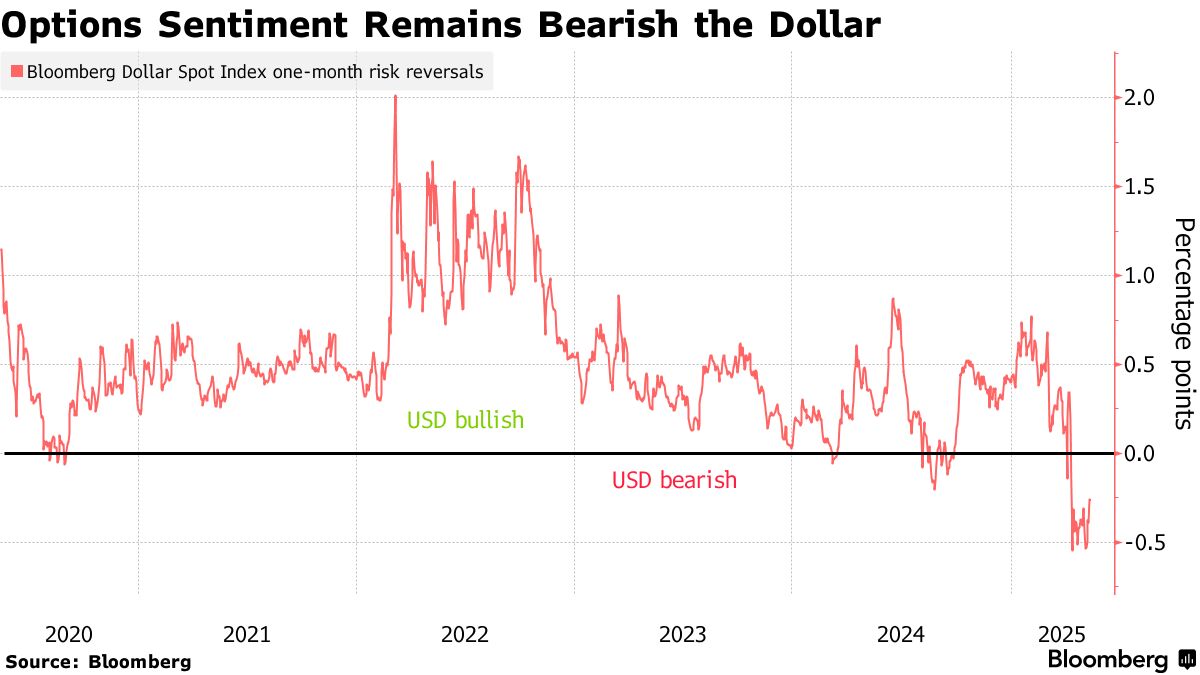
Despite The Let Up In “Sell America” Sentiment, Options Traders Remained Positioned Against A Strong Dollar Following Trump’s Tariff Pause On China. According to Bloomberg, “The dollar pared Monday’s gains, with traders unconvinced that the currency’s recent surge on the back of easing US-China trade tensions will last long and strategists forecasting continued weakness in the months ahead. A gauge of the greenback’s strength fell 0.3% as positioning in the options market continues to lean against the currency. Depository Trust & Clearing Corporation data show that dollar bearish bets so far this week total around $61 billion in notional value, more than the $55 billion in bullish trades. Following the release Tuesday of softer-than-expected US inflation data for a third straight month, the currency reached the day’s low alongside a slide in short-term Treasury yields.” [Bloomberg, 2025-05-13]
 [Bloomberg, 2025-05-13]
Market Strategists Noted That The Appeal Of The Dollar Had Been Diminished By The Unpredictability Of The Trump Administration. According to Bloomberg, “‘The view of the US as a “full faith and credit” counter-party won’t completely return soon, given the damage caused by April’s events,’ wrote Macquarie strategists Thierry Wizman and Gareth Berry. ‘It will limit the USD’s gains, before the USD starts to depreciate again on trends that were extant even before April’s events.’ So-called risk reversals, which reflect the difference in demand between bullish and bearish options, still signal long-term bearish sentiment on the greenback, albeit with slightly less conviction than last week. ‘US protectionist trade policies have raised the risk the US economy enters a period of stagflation. As such, we expect USD to come under renewed downside pressure,’ noted Elias Haddad, a currency strategist at Brown Brothers Harriman & Co.” [Bloomberg, 2025-05-13]
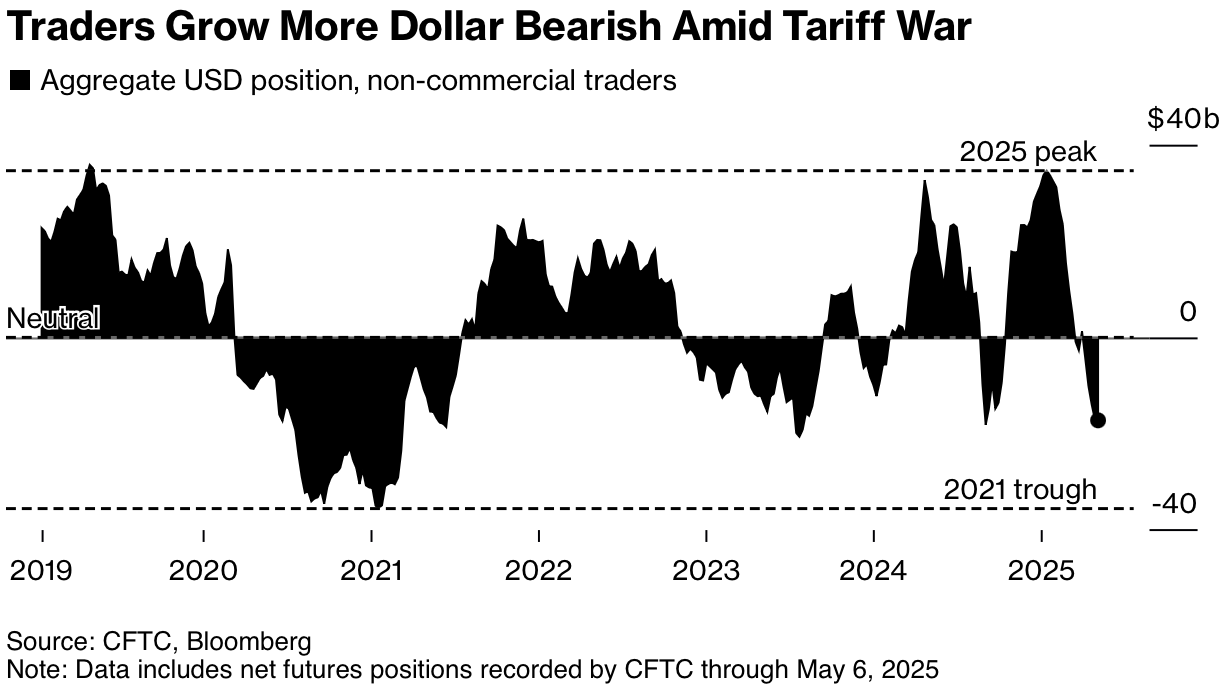
Jens Nordvig: Despite Tariff De-Escalation, Real Money Has Begun The Process Of Balancing Away From The United States. According to Bloomberg, “Unlike speculators that moved quickly to sell the dollar last month following tariff increases, institutional investors who bought trillions worth of US stocks and bonds over the past decade are still in the process of recalibrating their portfolios. While it could take some months to cut their holdings or accumulate short-dollar hedges, make no mistake, Nordvig says: the pain is coming. ‘We have a lot of real money clients that are saying “we really haven’t done much yet,”’ Nordvig, who first turned bearish on the dollar in early March, said in an interview. ‘All these longer-term players are looking for an opportunity to actually reduce their dollar exposure.’” [Bloomberg, 2025-05-13]
 [Bloomberg, 2025-05-13]
A Decline In Exports
2025: World Travel And Tourism Council Projected The United States Would Be The Only Country To See A Fall In Torurism Revenue, Losing $12.5 Billion. According to Bloomberg, “According to new data from the World Travel & Tourism Council (WTTC), shared exclusively with Bloomberg, the country is set to lose $12.5 billion in travel revenue in 2025, with visitor spending estimated to fall under $169 billion by year’s end. The numbers represent a decline of around 7% in visitor spending year-over-year, and a decline of 22% since tourism reached its peak in the US in 2019. This puts the US in a league of its own. Out of 184 global economies analyzed by WTTC in conjunction with Oxford Economics, it’s the only one projected to lose tourism dollars this year. ‘Other countries are really rolling out the welcome mat, and it feels like the US is putting up a “we are closed” sign at their doorway,’ says WTTC President and Chief Executive Officer Julia Simpson.” [Bloomberg, 2025-05-13]
Corruption
Trump Media And Technology: Internal Accounting Process Demonstrated “Material Weakness,” Raising The Risks Of Financial Misstatements. According to Bloomberg, “Trump Media & Technology Group Corp. showed ‘material weakness’ in internal controls over financial reporting, raising risks of misstatements, the firm’s latest quarterly result showed. The company carried out an evaluation of its disclosures and controls and found that procedures were not effective, the report said. It cited ‘failure to design and maintain formal accounting policies, processes, and controls to analyze, and account for complex transactions as well as a need for additional accounting personnel who have the requisite experience in SEC reporting regulation.’ The findings come after the company posted a net loss of $31.7 million for the first quarter, which it ended with cash, cash equivalents and short-term investments of $759 million. ‘TMTG’s management determined that the material weakness primarily related to its failure to design and maintain formal accounting policies, processes, and controls to analyze, account for and properly disclose income recordation as well as a need for additional accounting personnel who have the requisite experience in SEC reporting regulation,’ the company said in a statement. The findings raise the risks of a ‘reasonable possibility that a material misstatement of an entity’s financial statements will not be prevented or detected on a timely basis,’ according to the statement. The media group said it implemented remediation measures including hiring additional accounting staff with the required background and knowledge to rectify the issues.” [Bloomberg, 2025-05-10]
- Industry Data Suggested That Toursim Represented As Much As 9 Percent Of The American Economy. According to Bloomberg, “The consequences, Simpson says, could be devastating. ‘The US travel and tourism sector is the biggest sector globally compared to any other country, worth almost $2.6 trillion,’ she says, citing WTTC and Oxford Economics data. According to Simpson’s data, direct and indirect tourism represents 9% of the American economy. (Visitor spending is one of the ‘direct’ parts of the travel economy, while ‘indirect’ contributions include the knock-on effects of increased spending by hospitality professionals.) The sector employs 20 million people and creates $585 billion in US tax dollars each year—7% of all tax revenue the US government receives. It’s a ‘major mainstay of the US economy,’ she says.” [Bloomberg, 2025-05-13]