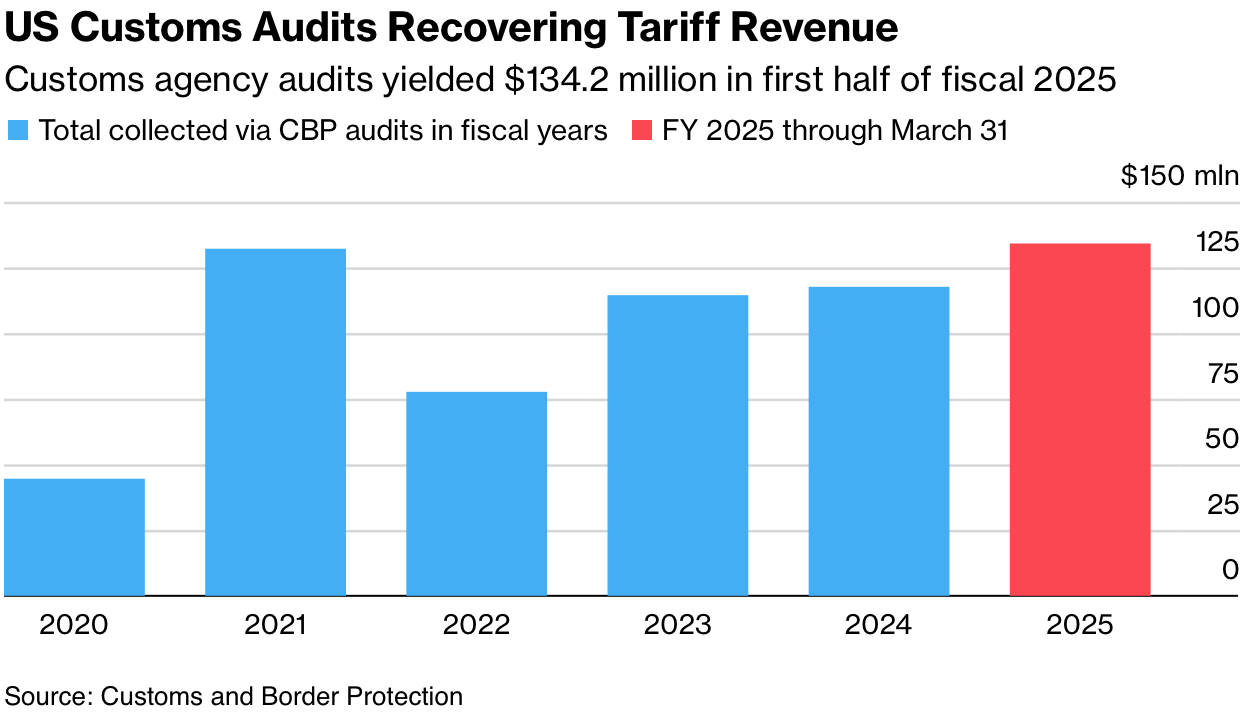
Housing markets face dual pressures from supply contractions and potential mortgage rate increases of up to 50 basis points if Trump proceeds with GSE privatization, which could cost homebuyers over $40,000 per loan lifetime. Meanwhile, Trump’s tariff regime has created unprecedented complexity for businesses, with customs reporting requirements jumping from zero to eight lines since 2019, leading to aggressive enforcement that recovered $134.2 million in the first half of fiscal 2025 alone.
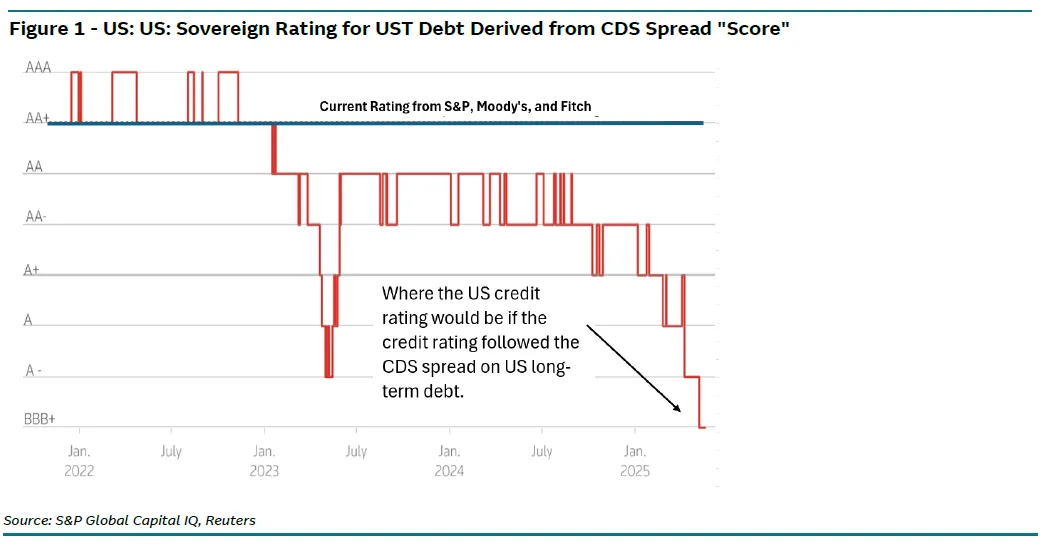
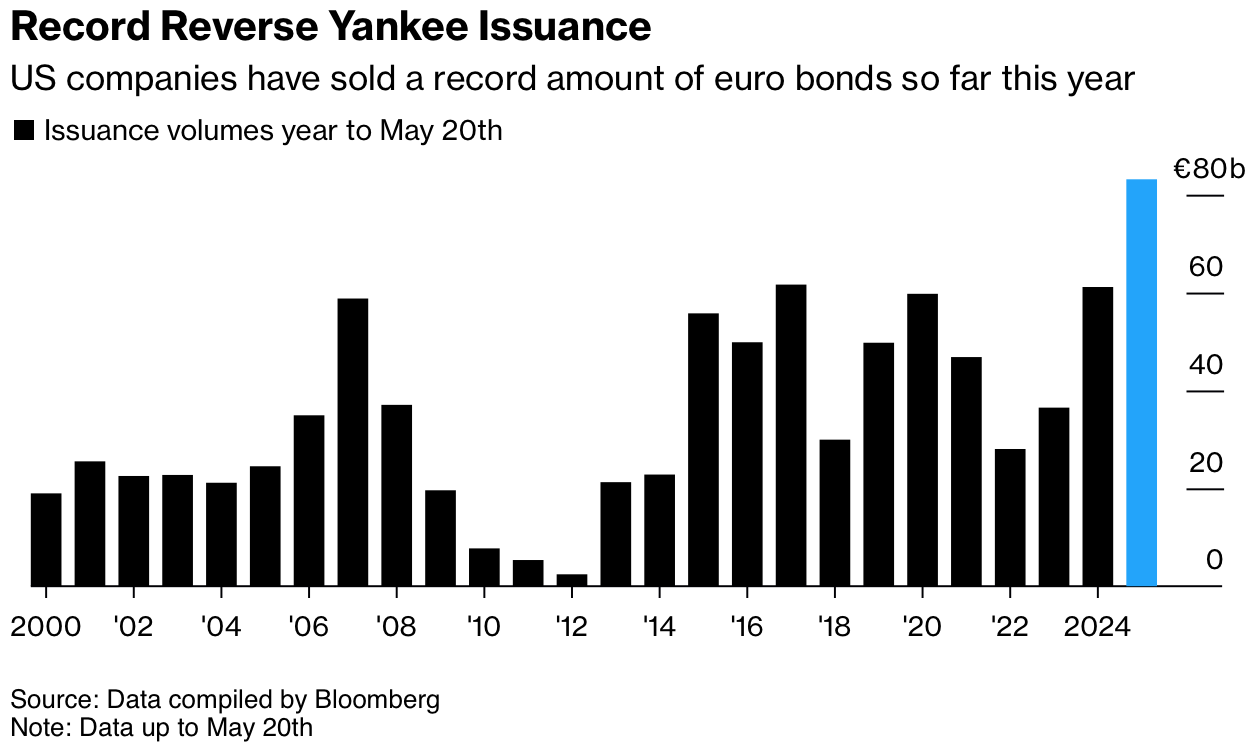
Financial markets are showing clear signs of stress, with credit default swaps suggesting U.S. Treasury debt should be rated six notches lower than current levels, while the dollar has weakened 9.36% under Trump’s tenure despite official “strong dollar” rhetoric. Corporate America is increasingly turning to European markets for financing, with record €83 billion in reverse Yankee bond issuance as borrowing costs are 2.12 percentage points cheaper in Europe than the U.S. Oil prices have fallen below breakeven levels for many U.S. producers, threatening 150,000-800,000 barrels per day in production cuts, while OPEC+ appears to be deliberately flooding markets to pressure American energy companies.
Meanwhile, the administration’s corruption continued unabated, with a dinner attended by Trump for some of the top holders of his cryptocurrency. Naturally, several attendees were there to push for specific crypto-related policies that would benefit them individually.
Housing
Code
# Include custom plot themeinclude("../scripts/oxocarbon-plot.jl")theme(:oxocarbon)# Call the necessary packagesusingStatsPlots, DataFrames, Dates, FredData# Set up the FRED api key =ENV["FRED_API_KEY"]f=Fred(key)# Gather the datapermits =get_data(f, "PERMIT"; observation_start="2024-04-01", observation_end="2025-04-01", units="pch").datasupply =get_data(f, "MSACSR"; observation_start="2024-04-01", observation_end="2025-04-01", units="chg").databar(permits.date, permits.value; title="April 2025's Hosuing Supply Contraction", ylabel="Hosing Permits Issued, MoM % Change", xlabel="Date", label="Permits", legend=:topleft)right_axis =twinx()scatter!(right_axis, supply.date, supply.value; markersize=4, color=colorant"#525252", label="Inventory", ylabel="MoM Change, Months of Supply",)
Trump’s GSE Privatization Could Cost Households Tens Of Thousands of Dollars
While Trump’s Post Supporting Re-Privatizing Fannie Mae And Freddie Mac Extended Gains For Hedge Funds, It Could Cost American Homebuyers More Than $40,000 Over The Life Of A Loan. According to Bloomberg, “President Donald Trump’s announcement that he’s weighing a public offering of US mortgage giants Fannie Mae and Freddie Mac sent their shares soaring, extending gains this year for hedge funds and other investors to almost $50 billion. But for US homebuyers, taking the entities public comes with risks that threaten to add more than $40,000 in costs to the typical borrower over the lifetime of the loan.” [Bloomberg, 2025-05-22]
Redfin Head Of Economic Research: Without The Implicit Government Backstop, Investors Might Demand Higher Rates To Buy Mortgage Backed Securities. According to Bloomberg, “Fannie and Freddie play a crucial role in the functioning of the US housing market. The entities buy and package home loans into securities and financially guarantee them to buyers. Given that both entities are overseen by the government, their bonds are seen as among the safest, bolstering the market for mortgage-backed securities. If investors start to think that the implicit government backing is lessened or removed, that could change their appetite for MBS and potentially raise the likelihood that investors will demand more of a premium for increased credit risk. That could translate into higher mortgage rates, according to Chen Zhao, head of economic research at Redfin Corp.” [Bloomberg, 2025-05-22]
Some Estimates Projected Mortgage Rates Would Jump By 50 Basis Points. According to Bloomberg, “At current rates, a buyer for a $414,000 home — the median sales price for a previously owned home in the US — would be paying about $2,172 a month, assuming there was a 20% downpayment. Some mortgage-bond investors have estimated that taking Fannie and Freddie public could risk raising mortgage rates by 0.5 percentage points or more. If that were to occur, that same mortgage payment would rise by about 5%, or $112 a month. That translates into a more than $40,000 increase in mortgage payments over the life of a 30-year loan.” [Bloomberg, 2025-05-22]
Mortgage Bankers Association Chief Economist: To Keep Rates Low, Congress Would Have To Enact An Explicit Backstop. According to Bloomberg, “While the Trump Administration may roll out a plan this year, getting it done will likely take multiple years, said Michael Fratantoni, chief economist for the Mortgage Bankers Association. ‘We”re in support of getting the process going — we are not in support in any sense that it is rushed,’ he said. ‘The highest goal is liquidity and access to mortgage credit for mortgage buyers and homeowners.’ Getting the companies into private hands will help them operate more nimbly so they can adjust more quickly to market conditions, he added. The government will be successful if it can pull off a public offering in a way that doesn’t drive up mortgage rates, he said. The cleanest approach to doing that would be through Congress to create an explicit guarantee of the full faith and credit of the US. ‘If you do this right, you should be able to get them out of conservatorship but you have to exit from the stake slowly over time, providing clarity around the backstop so that it doesn’t have an impact on the consumer,’ he said. ‘That’s the goal of this.’” [Bloomberg, 2025-05-22]
NOTE: Based on the importance of housing wealth to American households (real estate is the largest asset class for almost all Americans, while mortgages are the largest debt), it seems unlikely that it would be politically possible to pursue a policy that raised mortgage rates to the benefit of a few hedge fund managers. Therefore, Fratantoni is right about the fact that it would be necessary for there to be a government backstop, although it seems likely that one would be assumed with any privatization of the GSEs, even if it was not explicitly stated. That means that the American people will be on the hook for the losses of the GSEs, while the public shareholders will get the profits.
Trump’s Stagflation
May 2025: Following A Series Of Internal Stress Tests, Deutsche Bank Reduced Its Lending Activity To Companies Exposed To Trump’s Tariffs. According to Bloomberg, “Deutsche Bank AG has reduced its exposure to companies that are sensitive to the new US tariffs, after the German lender conducted a series of internal stress tests. ‘We have selectively reduced risk and customer limits in tariffs-sensitive sectors and downgraded individual customer ratings,’ Chief Financial Officer James von Moltke told investors at the bank’s annual shareholder meeting. Deutsche Bank is a key lender to many of Germany’s export-oriented companies, which stand to get hit unless Europe and the US reach a trade deal. The European Union earlier this week shared a revised trade proposal with Washington, as it aims to inject momentum in talks with President Donald Trump’s administration.” [Bloomberg, 2025-05-22]
Among The Sectors DB Would Limit Lending To As A Result Of Trump’s Tariffs Were The Automotive And Steel Industries. According to Bloomberg, “Deutsche Bank said last month that it had added a ‘dedicated tariff overlay’ to its credit provisions to account for the impact of the trade war and the worsening economic environment. Among the sectors most exposed are the automobile and steel industries, von Moltke said now. ‘The overall quality of our loan book remains stable,’ he told shareholders on Thursday.” [Bloomberg, 2025-05-22]
Incompetence
With Deadlines For The Expiration Of Trump’s Tariff Pauses Looming, American Importers Have Struggled With The Increasing Complexity Trump’s Overlapping Duties Have Imposed On Customs Compliance. According to Bloomberg, “Two de facto deadlines loom for companies that rely on foreign products: the estimated end of a 90-day suspension of Trump’s so-called reciprocal tariffs in mid-July, and another in mid-August, when a separate truce of the same length expires for China. If either lapses without a deal or postponement, tariff bills could skyrocket. ‘Everybody’s in agreement about these next two to four weeks being crunch time,’ said Scott Dudley, head of North America ocean freight at Rhenus Logistics, a freight forwarder. ‘This wait-and-see approach has been a great idea for a few weeks, but now importers have to act.’ Complicating the race is the need to comply with mounting electronic paperwork that must be logged with US Customs and Border Protection. The agency is policing businesses more aggressively to ensure they classify their goods correctly, pay the appropriate amount in taxes and identify the proper country of origin. Failure to comply results in even greater fees and penalties. The challenges are growing because a wave of goods is coming — the only questions are how big and how sustained it will be. Container carriers are reporting notable jumps in bookings for goods from China to the US. The Port of Long Beach — the second-busiest container port in the US and a major gateway for trade with Asia — projects imports will rebound into the middle of next month.” [Bloomberg, 2025-05-22]
Since Trump’s First Trade War, The Number Of Required Tariff Reporting Lines Has Jumped From Zero To Eight. According to Bloomberg, “A mountain of red tape is only adding to the stress. On a webinar last week, Steven Lunn, a senior customs manager with the digital-freight platform Flexport Inc., said customs entry forms now can require eight lines of tariff reporting, up from zero seven years ago under the Harmonized Tariff Schedule regime. ‘Back before 2019 — this is the time we all probably enjoyed the most — all you”re filing is your product. So you pay the duties, you have an HTS code that fits the product, boom, cleared, done, everyone’s happy. It was easy back then,’ Lunn said. ‘Now, however, this gets very complicated.’” [Bloomberg, 2025-05-22]
National Retail Federation On Whether Tariff Exemptions Will Apply To Goods That Leave Before Pauses Expire, “I Don’t Think They’ve Figured It Out Yet.” According to Bloomberg, “An open question: Do importers need to have their cargo in the US by the end of the 90-day pause on the higher China tariffs, or merely loaded in China? The temporary agreement is set to expire in mid-August. ‘That is one of those issues where we still need clarity from the administration,’ Jonathan Gold, vice president of supply chain and customs policy at the National Retail Federation, said on a webinar Monday. ‘I don’t think they”ve figured it out yet.’” [Bloomberg, 2025-05-22]
Despite A Fast-Changing Regime That Has Been Hard To Keep Track Of, Trump’s CBP Has Been More Agressive In Enforcing Strict Tariff Compliance Than Earlier Administrations. According to Bloomberg, “CBP — the federal agency that enforces tariffs and the nation’s trade laws — is cracking down on firms that don’t get it right. Through the first half of fiscal 2025, the agency completed 200 audits leading to collections totaling $134.2 million, already surpassing the sums recouped in each of the previous five full fiscal years. Another hurdle: Cargo shippers are having a hard time keeping track of changing trade policies. While CBP posted a fact sheet on its website earlier this month laying out the new requirements, importers still don’t have all the answers they need.” [Bloomberg, 2025-05-22]
While “The Onus Is On The Importer To Ensure Compliance,” Trump’s Trade Officials Have Announced They Have Made The Reporting Platform More Complicated. According to Bloomberg, “Other difficulties importers face relate to the platform CBP uses to collect data, said Tom Gould, a compliance and tariff strategy consultant in Seattle. The onus is on the importer to ensure compliance. When US trade officials announced at a recent conference that they were reprogramming ACE — short for Automated Commercial Environment — so it can handle as many as 32 HTS codes compared with current capacity of eight, “there was a noticeable groan in the room,” Gould said.” [Bloomberg, 2025-05-22]
The Combination Of Much More Intensive Enforcement And An Ever-Chaning Tariff Regime Has Made Businesses Desperate For Information. According to Bloomberg, “Gould said the typical interaction a company might have with CBP is a ‘review’ of a shipment to determine whether a product was actually produced where the filing says it was, and if the correct duty was paid. It’s conducted by an import specialist. Audits, on the other hand, are a much more intensive process conducted by a special regulatory audit unit within CBP, and may involve inspection of a year’s worth of shipments, Gould said. Businesses are seeking clarity wherever they can. Hardly a day goes by without the world of customs brokers and logistics experts offering confused importers a virtual update on the almost real-time changes in the biggest increase in US tariffs in almost a century. Attendance at webinars hosted by Freightos Group, which runs a cargo booking platform, is up almost 25% from November and exceeded 1,100 participants in April, according to Chief Marketing Officer Eytan Buchman. Topics range from how to analyze logistics data to fool-proofing strategies for procurement. ‘There is absolutely a massive spike in demand for information,’ Buchman said. ‘The rapid volatility, ambiguous policies and uncertainty of what’s coming next is daunting for businesses whose bottom lines literally depend on how sub-articles in trade policies are interpreted.’” [Bloomberg, 2025-05-22]
Oil Market
May 2025: OPEC+ Members Were Discussing A Larger-Than-Expected Production Bump In July, Causing Oil Prices To “Plunge.” According to Bloomberg, “OPEC+ members are discussing making a third consecutive oil production surge in July, to be decided at the group’s meeting in just over a week, delegates said. An output hike of 411,000 barrels a day for July — triple the amount initially planned — is among options under discussion, although no final agreement has yet been reached, said the delegates, asking not to be named because the information is private. A final decision is due to be taken at a gathering on June 1. The cartel has helped sink crude prices since announcing 411,000-barrel hikes for May and June — equivalent to about 1% of current OPEC+ output — in a historic break with years of defending oil markets. Oil made a fresh plunge on Thursday, dropping 0.9% to $64.31 a barrel as of 9:13 a.m. in London.” [Bloomberg, 2025-05-22]
Bloomberg: Privately, OPEC+ Members Have Said Their Flooding The Market Could Be About Placating Trump. According to Bloomberg, “While OPEC+ says the supply increases are to satisfy demand, officials have privately proffered a range of motives, from punishing over-producing members to recouping market share and placating President Donald Trump.” [Bloomberg, 2025-05-22]
March 2025: American Oil Producers’ Breakeven Prices For New Wells Ranged From $61 To $70 Per Barrel. [Dallas Fed, 2025-04-01]
Goldman Sachs: Trump’s Posts And Actions Revealed An “Inferred Preference For WTI […] Around $40 To $50 A Barrel.” According to Bloomberg, “President Donald Trump appears to prefer US oil prices between $40 and $50 a barrel, according to Goldman Sachs Group Inc., citing an in-house analysis of his social-media posts on the topic. Trump ‘has always been focused on oil and on US energy dominance, having posted nearly 900 times,’ analysts including Daan Struyven said in a report. His ‘inferred preference for WTI appears to be around $40 to $50 a barrel, where his propensity to post about oil prices bottoms,’ they said. Oil prices — both global crude benchmark Brent, as well as US counterpart West Texas Intermediate , or WTI — are often buffeted by the president’s prolific social-media commentary, which can reference everything from OPEC policy and US gasoline prices to sanctions against nations including Iran. His administration has favored increased domestic production, as well as a broad push for cheap energy to help bring down inflation. The US leader ‘tends to call for lower prices (or celebrate falling prices) when WTI is greater than $50,’ the analysts said. ‘In contrast, President Trump has called for higher prices when prices are very low (WTI less than $30) often in the context of supporting US production.’” [Bloomberg, 2025-05-14]
Lower Oil Prices Could Cut American Oil Production By Between One And Six Percent. According to Semafor, “The contradiction was clear from the start: Trump wants lower oil prices while simultaneously growing domestic output. The administration is easing regulations and cutting red tape, but the industry doesn’t see this as enough to offset price pressure. The US benchmark, West Texas Intermediate, is hovering around $60 a barrel, down around 15% this year. This price is at a level that some producers say could lead to a decline of 150,000 to 200,000 barrels per day (bpd) in US output this year. For what it’s worth, Kpler, the independent data provider where I work, projects that US oil production is expected to remain flat at 13.4 million bpd. But if prices dip, and remain, at $55 a barrel for the remainder of 2025, we estimate that US output could decline by 800,000 bpd. The administration wants prices even lower.” [Semafor, 2025-05-13]
Code
# Connect to the Yahoo Finance API usingYFinance# Get WTI Prices for Trump's termwti =get_prices("CL=F"; startdt=Date(2025,1,15), enddt=Date(2025,5,26), interval="1d") |> DataFrame# Make the plotplot(Date.(wti.timestamp), wti.close; title="Trump Has Undermined American Oil Producers", xlabel="Date", ylabel="WTI Price, USD", label="Price", linewidth=2,)hspan!([61,70], alpha=0.25, label="Breakeven Range, New Wells")vline!([Date(2025,4,2)], label="Tariffs")vline!([Date(2025,5,22)], label="OPEC+ Leak")
House Republicans Bill
Energy Innovation Policy And Technology: Repealing IRA Clean Energy Programs Could Cost American Households Hundreds Of Billions Of Dollars In Lost Income, And Tens Of Billions Of Dollars In Higher Energy Bills. According to Energy Innovation Policy and Technology, “The Inflation Reduction Act (IRA) has been an economic engine for the U.S.– more than 400,000 new jobs have been created and $600 billion of private investment in clean energy has been generated since Congress passed the IRA. But repealing it will force consumers to pay more for energy and will cost Americans jobs. Our analysis finds IRA repeal will: Increase cumulative household energy costs by $32 billion from 2025-2035. Cost America nearly 790,000 jobs in 2030 and more than 700,000 jobs in 2035. Decrease GDP more than $160 billion in 2030 and nearly $190 billion in 2035. Increase climate pollution more than 530 million metric tons of carbon dioxide equivalent in 2035, equal to adding 116 million cars to the road.” [Energy Innovation Policy and Technology, 2025-03-20]
Energy Innovation Policy And Technology: Texas, California, Pennsylvania, Florida, And Georgia Stood Out As The States With The Most To Lose Under A Repeal. According to Energy Innovation Policy and Technology, “Texas, California, Pennsylvania, Florida, and Georgia stand out as the biggest losers from IRA repeal due to their poor combination of lost jobs and increased household energy costs.” [Energy Innovation Policy and Technology, 2025-03-20]
Higher Prices
May 2025: While They Had Already Been Planning To Raise Prices, Ralph Lauren Announced That Their Price Increases Would Be Even Larger Because Of Trump’s Tariffs. According to the Wall Street Journal, “Ralpha Lauren said its customers are still spending on luxury goods despite the rocky economic backdrop, and that it will raise prices more than previously planned in order to offset tariffs.The luxury apparel-and-accessories company on Thursday reported a bigger profit and a jump in revenue for the first three months of the year, citing higher prices and lower cotton costs. The brand has been successful in drawing in customers that are younger and less skittish when prices go up, according to Chief Financial Officer Justin Picicci. ‘We”ve been on this multi-year journey to shift our customer base towards less price-sensitive consumers, especially in the full-price channel,’ Picicci said on a call with analysts. Management had already been planning to increase prices again on some items for the fall, but is now looking at bigger hikes for the fall and for the following spring in response to tariffs. The new levies are expected to cut into Ralph Lauren’s gross margin, though the company said it will try to minimize the impact by making adjustments to its supply chain.” [Wall Street Journal, 2025-05-22]
Capital Flight
Credit Default Swaps Across The Entire U.S. Treasury Curve Would Imply A Rating Of BBB+, As Capital Flight (Implied By Higher Yields And A Weaker Dollar) Have Made Treasuries Much Less Safe. According to Bloomberg, “This is a point made by Thierry Wizman and Gareth Berry at Macquarie. They argue that you can get a sense of credit concerns in US Treasuries versus Japanese government bonds by looking at credit default swaps (CDS). They estimate that the US credit rating should be six notches lower than it currently is (even after the Moody’s downgrade last week). Meanwhile, CDS on JGBs have picked up recently, but not nearly as much. As discussed yesterday, the different way investors are viewing USTs versus JGBs can also be seen in their respective currencies movements. The US dollar has been falling this week even as yields go up — something which is not really supposed to happen (since higher rates typically attract more capital into a country, which increases demand for its currency). But the yen is strengthening against the dollar as Japanese yields go up, which is all pretty normal. While there may be similar fiscal concerns running through both markets, investors are clearly more worried about one than the other.” [Bloomberg, 2025-05-22]
With Japanese Bonds Becoming A More Attractive Investment, There Is A Worry That A Not Insignificant Amount Of The $1.13 Trillion In Treasuries Japanese Holders Currently Have Could Be Moved To Their Debt. According to Bloomberg, “One final point on relativity in the bond market. Who holds the debt, and how much of it, also matters here. US Treasuries have been the dominant reserve asset for decades. That means Japanese institutional investors hold a lot more USTs than American institutional investors hold in JGBs. This is a point also made by the Macquarie analysts: ‘… If we include official reserves, Japan’s entities together are the largest foreign holder of UST securities ( see here), at roughly USD 1.13tr as of Q1 2025. That’s the result of decades of accumulation, during which Japan’s institutional investors and the BoJ recycled domestic USD inflows of capital and BoJ liquidity (indirectly) into the higher-yielding USTs. Those flows funded the global carry trades, but also helped in suppressing long-end UST yields during the period of recycling and accumulation.’ The worry now is that, if JGB yields keep surging, at some point big Japanese investors are going to be lured back into buying their own domestic bonds. That would mean the US would have to pay higher yields on its own debt to compete, raising its cost of financing at a precarious time. As Macquarie puts it: ‘There could be a trigger point where Japan’s investors suddenly repatriate their capital from the US and into Japan.’” [Bloomberg, 2025-05-22]
May 2025: Trump CEA Chair Miran: Despite Notable Declines In The Strength Of The Dollar, “The United States Continues To Have A Strong Dollar Policy.” According to Bloomberg, “The White House’s chief economist rejected the notion that a secret currency accord to weaken the dollar is in the works, and instead touted the benefits of a strong greenback. ‘The United States continues to have the strong dollar policy,’ Stephen Miran, chair of the Council of Economic Advisers, said on Bloomberg’s Big Take DC podcast. He noted that Treasury Secretary Scott Bessent is the official spokesperson for currency policy. ‘We”re not secretly at work on any of this stuff. There’s nothing there,’ he said about speculation of an international pact to depreciate the dollar. The currency market has seen bouts of volatility in recent weeks as traders considered the potential for US trading partners to agree to strengthen their currencies against the dollar as a tool to help address trade imbalances. President Donald Trump has a long history of accusing other countries of deliberately weakening their exchange rates to gain a commercial edge over America. Asian currencies in particular have jumped since April 9, when Trump put his steep ‘reciprocal’ tariffs on hold to allow for negotiations. Taiwan’s dollar is up almost 10% since then, and earlier this month saw the biggest leap since 1988. South Korea’s won is 6.4% higher. The Bloomberg Dollar Spot Index is down over 6% since Trump took office.” [Bloomberg, 2025-05-22]
April 2025: Miran Called The Dollar’s Status As The Global Reserve Currency A “Burden.” According to Bloomberg, “Still, there has been some mixed messaging from the administration. In a speech in April, Miran called the dollar’s hegemonic status in global financial markets a “burden” on American companies and workers by making products and labor “uncompetitive” internationally.” [Bloomberg, 2025-05-22]
Code
# Get the dollar index data for Trump's second termusd =get_prices("DX-Y.NYB"; startdt=Date(2025,1,17), enddt=Date(2025,5,26), interval="1d") |> DataFrame# Normalize the data to the adjusted close on January 17, 2025 (the first observation)usd.adjclose =100.0.* usd.adjclose ./ usd.adjclose[1]# Create the plot plot(Date.(usd.timestamp), usd.adjclose; title="Under Trump, The Dollar Weakned By $(round(100.0- usd.adjclose[end-1], digits=2))%", xlabel="Date", ylabel="Dollar Index (January 17, 2025 = 100)", label="Index", linewidth=2,)scatter!(Date.(usd.timestamp), usd.adjclose; label="",)
NOTE: Jumps are due to weekends and holidays.
Europe Rising Relative to America
2025: Due To Tariff Anxiety And A Weakening Dollar, American Companies Have Increasingly Turned To Borrowing To Fund Their Foreign Operations Abroad. According to Bloomberg, “The giants of corporate America from Pfizer Inc. to Alphabet Inc. are borrowing in euros like never before as the anxiety triggered by President Donald Trump’s tariff threats pushes them to hunt for alternative funding avenues in case their home market freezes up. A record number of these so-called reverse Yankee deals have been sold this year at a total value of more than €83 billion ($94 billion), up 35% on 2024, according to data compiled by Bloomberg. That’s nearly 14% of overall euro corporate issuance, the data shows. This all comes after Trump’s tariff pronouncements sparked market mayhem in April. On Friday, Moody’s downgraded its credit rating on the US, stripping the world’s largest economy of its last triple-A rank. For decades the US corporate bond market has been the go-to destination for money managers. But early signs are emerging that Trump-induced dollar volatility, inflated Treasury yields and fears about the country’s debt burden are fueling a gradual reweighting toward the Old Continent. That would delight euro zone leaders desperate to bolster the bloc’s capital markets. ‘The increasing depth of the European market is a massive factor,’ according to Andrew Menzies, head of debt capital markets at Societe Generale SA. Chunky deals and big issuance days used to be a feature in the US, he says, but ‘you see it now in Europe as well, as typified by the supply in recent days being taken down relatively easily.’ The US remains by far the most liquid market, with nearly $7.5 trillion of bonds in Bloomberg’s main index of blue-chip US company debt, and Europe is the next biggest player with €2.85 trillion of bonds. But recent gains by the euro against the dollar are adding to the bullishness.” [Bloomberg, 2025-05-21]
For American Companies, Borrowing In Europe Is Cheaper Than In The United States By The Most In Years. According to Bloomberg, “Diverging interest rates — the basis for corporate borrowing costs — play a huge part in euro bonds’ attractiveness, particularly for companies with operations in Europe who don’t have to exchange back into dollars. The average yield on an index of US corporate bonds is quoted at 5.3%, and the European equivalent is 3.18%. Last month that difference was the widest in three years.” [Bloomberg, 2025-05-21]
Strong European Earnings Have Driven Positive Forecast Changes For Companies Based On The Continent. According to Bloomberg, “European companies have largely delivered resilient earnings in the face of tariff chaos this reporting season, supporting the bull case for the region’s stocks. The first quarter produced increased sales and improved margins across most sectors, with earnings growth running at 5% year-on-year, defying consensus expectations for a 1.5% decline, according to Bloomberg Intelligence. Chief executives struck a broadly confident tone as they discussed the tariff storm, focusing instead on prospects for trade deals. The respectable numbers and optimistic words are prompting upgrades from some Wall Street strategists. ‘Just weeks ago, Europe saw “recessionary” EPS revisions amid heightened macro/policy uncertainty,’ said Citigroup Inc. strategists led by Beata Manthey. ‘However, Stoxx 600 companies have delivered surprisingly “normal” results throughout the first quarter reporting season, with a historically typical share and size of earnings beats.’ For the Citi strategists, the market has passed peak uncertainty over earnings and the reporting season supports further outperformance by cyclical stocks that are linked to the economy. Peers at Goldman Sachs Group Inc. last week raised estimates for earnings per share growth to 0% in 2025 from a decline of 7%, and now see a gain of 4% in 2026, after predicting no increase. The Goldman team cited good first-quarter earnings and better economic prospects in Europe. German fiscal stimulus and lower interest rates are additional tailwinds for the region.” [Bloomberg, 2025-05-22]
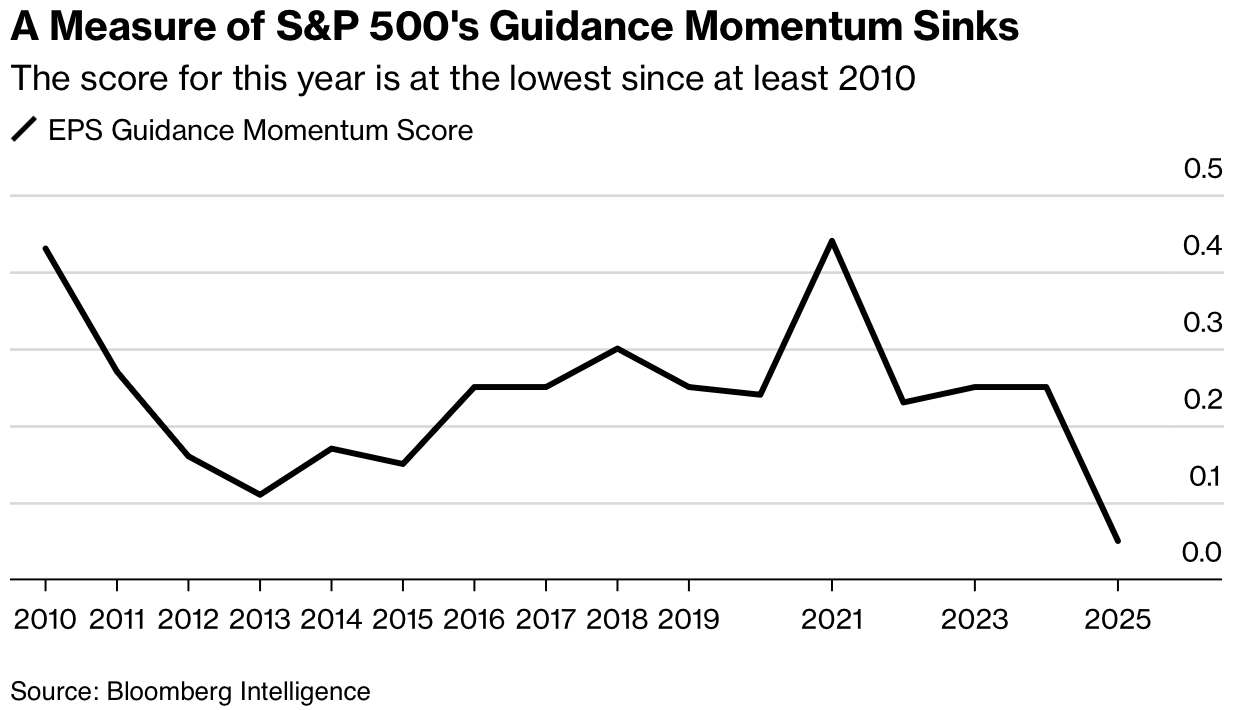
Q1 2025: Uncertainty Drove A Measure Of Positive Revisions To American Earnings Guidance To The Lowest Level Since At Least 2010. According to Bloomberg, “One thing is clear as the first-quarter earnings season draws to a close: The uncertain outlook for the global economy is superseding better-than-feared results even as stocks rally on signs of easing trade tensions. Corporations across the US, Europe and China are pulling their forecasts for the year or providing grim outlooks, citing rising costs, weak consumer sentiment and a lack of business confidence as a result of President Donald Trump’s worldwide trade offensive. ‘This earnings season wasn’t about the numbers, it was about the narrative,’ said Scott Ladner, chief investment officer at Horizon Investments LLC. ‘Nobody cared what you did in the first quarter other than to determine the jumping off place for the new tariff economy.’ In the US, a measure that reflects the proportion of S&P 500 Index members that raised their earnings outlook compared to those that held or reduced, the so-called profit guidance momentum, fell to the lowest level since at least 2010, according to an analysis from Bloomberg Intelligence’s equity strategists Gina Martin Adams and Wendy Soong. That is in spite of S&P 500 companies delivering double the profit growth that was expected in the first quarter, according to BI.” [Bloomberg, 2025-05-17]
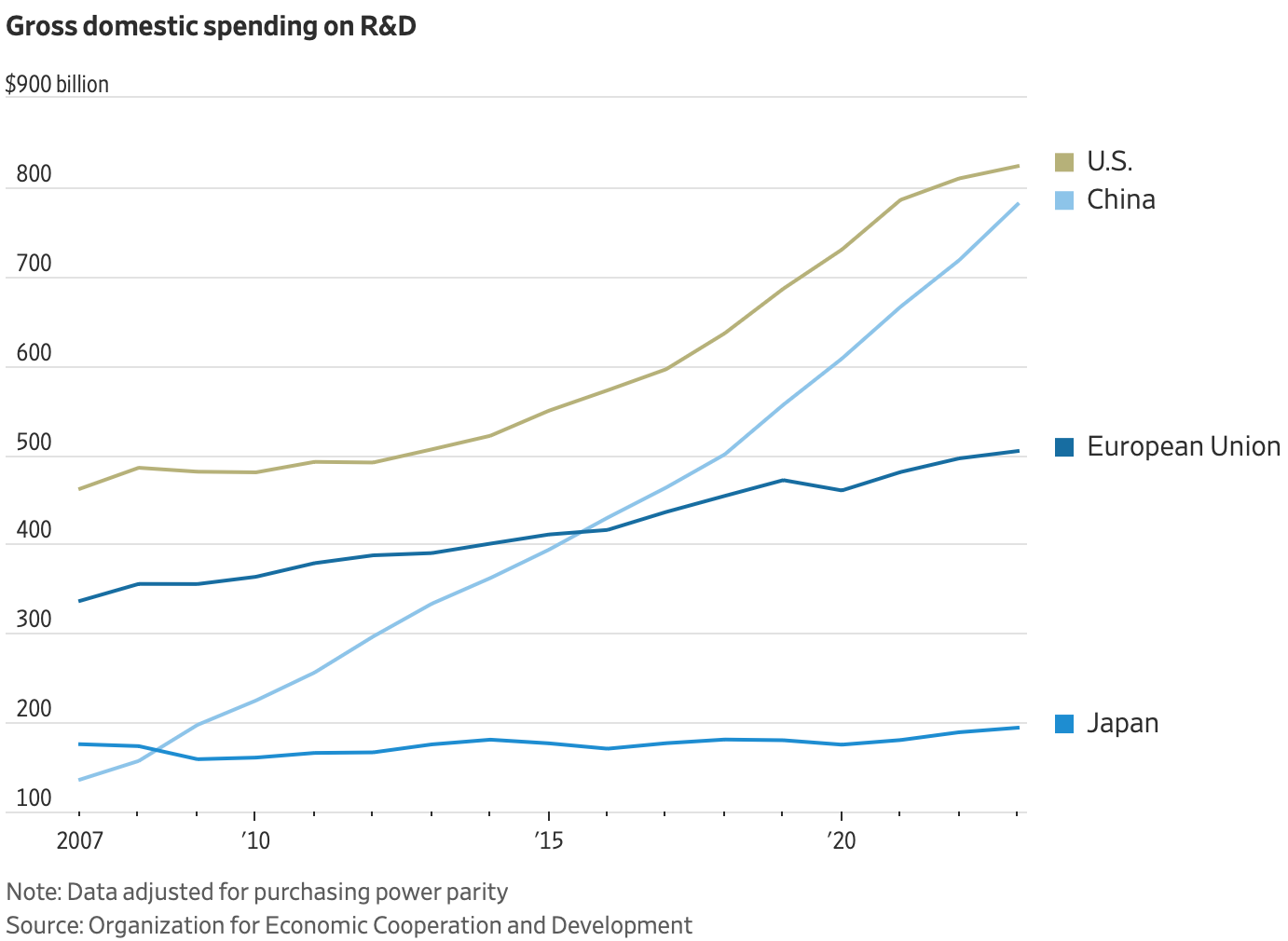
May 2018: After Trump Launched His First Trade War, The CCP, Fearful Of Technology Being Denied, Shifted To Focus On Reducing Technological Reliance On The Outside World. According to the Wall Street Journal, “The storm clouds for China were gathering when leader Xi Jinping convened the country’s top scientists at the Great Hall of the People in Beijing in May 2018. The U.S. was beginning to clamp down on selling technology to China, with more restrictions on the way. China must not be forced to beg others for technology, Xi said. Only through self-reliance ‘can we fundamentally safeguard national economic security,’ he said. Since then, China has raced ahead in many strategic sectors—and in some cases is catching up with the U.S. Its electric-car companies are among the world’s best. Chinese AI startups rival OpenAI and Google. The country’s biologists are pushing the boundaries of pharmaceutical research, and its factories are being filled with advanced robotics. At sea, Chinese-made cargo vessels dominate global shipping. In space, the country has been launching hundreds of satellites to monitor every corner of the Earth. Beyond frontier technology, Beijing is pursuing greater self-reliance in food and energy, and has bulked up its military. These successes and many others are helping to fortify China and its economy as Xi prepares the nation for an era of sustained hostilities with the U.S., including the continuing trade war. The two sides are entering complex negotiations, with many of the latest tariffs temporarily suspended. The advances are making China less dependent on the rest of the world for goods and services. Imports overall fell to less than 18% of gross domestic product in 2023 compared with about 22% a decade earlier.” [Wall Street Journal, 2025-05-21]
As China Has Been Ramping Up R&D Spending, Trump Has Been Pulling The United States Back. According to the Wall Street Journal, [Wall Street Journal, 2025-05-21]
It is important to note that this shift has not been too beneficial for the median Chinese citizen. Pushes for Autarky lead to wasted resources and different areas replicating each other’s work. The point of this source is that the first Trump administration had the idea to isolate China and keep it from continuing to move up global value chains, and as a result, China has replicated large parts of global value chains. It was a failed effort, and doubling down will not help things. Pushes for Autarky lead to wasted resources and different areas replicating each other’s work. The point of this source is that the first Trump administration had the idea to isolate China and keep it from continuing to move up global value chains, and as a result, China has replicated large parts of global value chains. It was a failed effort, and doubling down will not help things.
Corruption
From His First Term To His Second, Trump Doubled The Membership Fees For Mar-A-Lago, To $1 Million. Initiation Fees At Some Of His Other Clubs Have Jumped Well Into Six Figures. According to the Wall Street Journal, “Donald Trump’s private clubs have emerged as a moneymaking venture for the president’s second term, and a hub for donors and favor-seekers alike. It now costs a record $1 million to join Mar-a-Lago, Trump’s Florida resort, according to people familiar with the membership fees, up from about $500,000 during his first term. The initiation fee at Trump’s golf club in Bedminster, N.J., rose to $125,000, surging from $75,000 in recent years, a person close to that club said. Another Trump golf club in Florida, near Mar-a-Lago, now charges more than $300,000 to join, according to people familiar with the matter.” [Wall Street Journal, 2025-05-21]
Lobbyists Have Noted That Clients Looking For Tariff Exemptions Have Been Looking To Join Trump Clubs. According to the Wall Street Journal, “Since Trump won the White House, five lobbyists said they repeatedly were asked by clients how to get into the club to potentially see the president, particularly clients looking for exemptions on tariffs.” [Wall Street Journal, 2025-05-21]
May 2025: Two Chinese Companies Announced Plans To Purchase Hundreds Of Millions Of Dollars Worth Of Cryptocurrencies Including Trump’s Memecoin As They Faced Possible Delisting. According to the Wall Street Journal, “A technology company called GD Culture Group said on May 12 that it had struck a $300 million funding deal to help it amass a stockpile of cryptocurrencies, including bitcoin and the president’s memecoin, $TRUMP. The announcement sent shares of GD Culture, which is based in New York but operates in China, up by 14%. Three days later, Chinese garment maker Addentax Group said it was in discussions with unnamed crypto holders to buy up to $800 million of $TRUMP tokens and bitcoin. Addentax’s stock didn’t quite get the same boost, falling about 7% that Thursday after an intraday surge of more than 150%. GD Culture and Addentax share more than just ties to China and a mutual affinity for the president’s memecoin: They are both in danger of being delisted from Nasdaq, a major U.S. exchange. And by promoting investments in crypto (and Trump), these companies might simply be grasping for ways to raise their stock prices and hold on to their U.S. listings, securities-industry executives said.” [Wall Street Journal, 2025-05-21]
Crypto
Dan Davis: By Bringing Stablecoins Into The Dollar System, It Would Become Exposed To The “Trainspotting Problem.” According to Dan Davies, “If you get into the habit of sending small amounts of physical gold through the post to pay for things, you will quickly attract the attention of law enforcement, and this is uncomfortably similar to what a lot of crypto finance does. But the problem is worse, because even if you successfully exclude stablecoin dollars from your own system, you”re not really safe from them. In ‘Lying for Money’, I referred to money laundering compliance as having the ‘Trainspotting Problem’, after the book and film in which a lot of people died from sharing needles. It’s ubiquitous problem in banking – just trusting your counterparty isn’t enough, you have to be confident you can trust everyone they trust, reasonably confident that you can trust everyone who everyone they trust trusts, and even the fourth and fifth degrees are potentially material. So if USD stablecoins are in the system, they”re in all of the system. If one of them collapses, or blows up (or even has a major IT outage), people will immediately worry about whichever banks had exposure to the bust stablecoin. Then they will worry about who might have exposure to the banks on that list, and so on. Which means that GENIUS makes the product more convenient and better for a subset of users (crypto speculators, crooks, and people who really really want to save a little bit of time and effort on correspondent banking by taking a small but significant risk).But it makes it much worse for a key set of decision makers; the stakes are now that as well as all the other grabby extraterritorial power claims, you now have to agree that your financial system is letting in a bunch of unregulated and untransparent shadow banks.” [Dan Davies, 2025-05-23]
Crypto Dinner
A Trump-Tied Business Entity Has Made At Least $320 Million In Fees From Trading His Memecoin. According to the New York Times, “The dinner was designed to fuel more sales. The organizers framed it as a contest: The top 220 buyers would dine with Mr. Trump at his golf club, while the top 25 would attend a more intimate gathering with the president before dinner and go on a tour of the White House. (In a quirk, the winners were selected based on the average number of coins they held during the three weeks the contest was held, rather than their total at the end of bidding.) ‘We want to be the leader in crypto, we want to be the leader in everything,’ Mr. Trump told the top 25 guests on the $TRUMP coins leaderboard, according to a video shared with The Times. ‘It’s very important to me.’ A business entity tied to the Trumps sits on a large stash of the $TRUMP cryptocurrency and collects fees every time the coins change hands. So far, the coin has generated at least $320 million in fees, which the Trumps share with their business partners, according to Chainalysis, a crypto analytics firm.” [New York Times, 2025-05-22]
Justin Sun, The Holder Of $23 Million Of Trump’s Memecoin Attended A Dinner With Trump And Other Holders Of The Coin. According to the Wall Street Journal, “Crypto billionaire Justin Sun for years wouldn’t set foot in the U.S. for fear of arrest. The Chinese-born tycoon, facing scrutiny from U.S. authorities, even missed a chance to fly on Jeff Bezos’ Blue Origin rocket despite paying $28 million for the opportunity. Now, Sun isn’t just back in America. He is in suburban Washington to attend a dinner with President Trump as a VIP guest. After weeks of industry speculation, Sun confirmed in a social-media post Tuesday that he is the largest holder of the president’s $TRUMP memecoin. His some $23-million stash catapults him into the exclusive circle of 25 investors who were invited to a private VIP reception with Trump on Thursday. Critics say the event is among the most glaring demonstrations yet of the conflicts of interest for Trump and his family as they pursue a range of business ventures.” [Wall Street Journal, 2025-05-22]
2021: The Justice Department Launched An Investigation Into Sun, And By 2023 It Had Reached The Point Where He Avoided Traveling To The Country Due To Fear Of Arrest. According to the Wall Street Journal, “The Justice Department, meanwhile, had been investigating Sun for suspected financial crimes, people familiar with the case said. The U.S. attorney’s office in Manhattan requested information from Sun back in 2021 and continued gathering evidence through at least 2023, some of the people said, causing him to avoid travel to the U.S. over concerns about a possible arrest warrant. That meant Sun, who is based in Hong Kong, had to skip the 2021 launch of Blue Origin’s first crewed space flight, on which he had won a spot, the people said. (At the time, Blue Origin said Sun pulled out due to scheduling conflicts.)” [Wall Street Journal, 2025-05-22]
2023: Fincen Noted Justin Sun’s Tron Network Was A Popular Channel For Criminality In Crypto. According to the Wall Street Journal, “Until Trump’s election win, the 34-year-old entrepreneur was in the sights of U.S. authorities and was persona non grata in much of the U.S. crypto industry. His company Tron, which operates a blockchain network with the same name, has been a popular channel for crypto’s criminal fraternity to move funds. The U.S. Treasury Department’s Financial Crimes Enforcement Network wrote in a private 2023 report that Tron was ‘growing in popularity among illicit actors.’ By last year, more than half of all illegal crypto activity—some $26 billion—took place on the network, according to researcher TRM Labs, which tracks crypto transactions and works with law enforcement.” [Wall Street Journal, 2025-05-22]
February 2025: Trump’s SEC Paused Its Investigation Into Sun. According to the Wall Street Journal, “Sun faced charges from the Securities and Exchange Commission, which in 2023 accused him of fraudulently manipulating the market for Tron’s TRX token. The SEC asked a court in February to pause its lawsuit. […] Sun’s fortunes took a turn after he invested $75 million in World Liberty Financial, a crypto project Trump and his sons launched last September. He was named an adviser to the venture. Later, he started buying the president’s memecoin. The SEC’s decision to pause its suit against Sun and Tron surprised several agency staffers who were highly confident in winning the case, people familiar with the matter said. Sun, who has called the SEC lawsuit meritless, tweeted a handshake emoji in response to the news.” [Wall Street Journal, 2025-05-25]
**Korean Crypto Executive Who Attended The Dinner: “It’s Kind Of A Fund-Raiser, And He’ll Always Be Good To His Sponsors.** According to the New York Times,”Sangrok Oh, a Korean crypto executive, arrived at the dinner with a collection of red baseball caps emblazoned with the words ‘Make Crypto Great Again’ that he planned to hand out at the event. He said he had flown all the way from Seoul to attend the dinner. ‘It’s kind of a fund-raiser’ for Mr. Trump, Mr. Oh said in an interview at his hotel in Virginia. ‘And he”ll always be good to his sponsors.’” [New York Times, 2025-05-22]
One Attendee Ran A Crypto HFT Firm That Did Not Operate In The United States, But Was Looking To Enter The Market. According to the New York TImes, “Others guests included Vincent Liu, the chief investment officer at Kronos Research, a crypto firm founded in Taiwan. Kronos profits by conducting high-frequency trading on crypto platforms across the world — except in the United States. But with a nod from Mr. Trump and his regulators, Mr. Liu wants to enter the U.S. market. His firm bought enough of the $TRUMP coins to ensure he had a seat at the dinner — with the hope he might get Mr. Trump’s ear. ‘I will definitely not hesitate to share my perspective,’ Mr. Liu said. ‘It’s great to see the current direction that everything’s going.’” [New York TImes, 2025-05-22]
CREW: 50 Trump Crypto Dinner Invitees Hold Tokens Linked To Alt-Right Symbols And Racist Language. [Crew, 2025-05-22]
Private Equity
Bloomberg had a story about how the PE deals that have been done recently have involved a drastically reduced share of debt as opposed to equity than earlier comparable deals. While this is good for the companies that are being acquired, it is bad for the PE firms, and their investors, as their exposure to the upside of their theoretical value add (as I detailed in April) has been diminished. With investors already suffering, and exits rarer by the month, the signs of headwinds appear notable for the industry. Therefore, the industry and White House’s pushes for greater retail access are all the more worrying.
 [Bloomberg,
  [Bloomberg,
  [Bloomberg,
  [Bloomberg,
  [Wall Street Journal,